A plane crashed at a Douglas County golf course after striking at least one bird during take off Saturday morning,...
Read More


We believe that the key to reduce damaging wildlife strikes to aircraft in Canada is by building a community of professionals to exchange ideas, experiences and co-operative efforts to better manage wildlife at all Canadian airports. It is through the ecological management of wildlife and the application of best practices that we will be successful in reducing strikes to aircraft. In pursuing these beliefs, we influence all aspects of airport wildlife management in Canada.
The Bird Strike Association of Canada (BSAC or Bird Strike Canada) is a leader in airport wildlife strike prevention. Through dialogue with the industry, Bird Strike Canada seeks and advances innovative ideas in aviation safety. Our mandate includes setting standards and addressing industry issues by formulating effective strategies and implementing change through regulatory means. Birdstrike Canada is “The Canadian Voice of Wildlife Strike Prevention.”
The Bird Strike Canada is recognized by Transport Canada as Canada’s National Bird Strike Committee organized under the guidelines set by the International Civil Aviation Organization (ICAO).
Before a jet engine can be certified, it must undergo rigorous bird strike testing to demonstrate its ability to withstand impacts with wildlife.
Using compressed-air cannons, technicians shoot birds directly into running engines operating at takeoff power.
These tests evaluate how engines respond to birds of different sizes and to various scenarios involving flocks of birds, including their ability to maintain thrust, contain debris, and prevent dangerous failures.
It offers a fascinating glimpse into the engineering and safety measures underpinning modern aviation, as well as a reminder of why wildlife risk management remains so important to the industry.
On October 6, American Airlines Flight AA734, traveling from Charlotte, North Carolina, to London-Heathrow, experienced a double bird strike shortly after takeoff from Charlotte Douglas International Airport.
The birds struck the lower part of the radome, located at the front of the aircraft and housing the weather radar.
After checking the systems and flight parameters, the crew found no anomalies that would compromise the aircraft’s safety. The flight therefore continued on to London, where the maintenance crews had been asked to perform a visual inspection as a precautionary measure.
This incident serves as a reminder that collisions with birds can occur even during the earliest stages of flight and that assessment and maintenance procedures play a critical role in aviation safety.
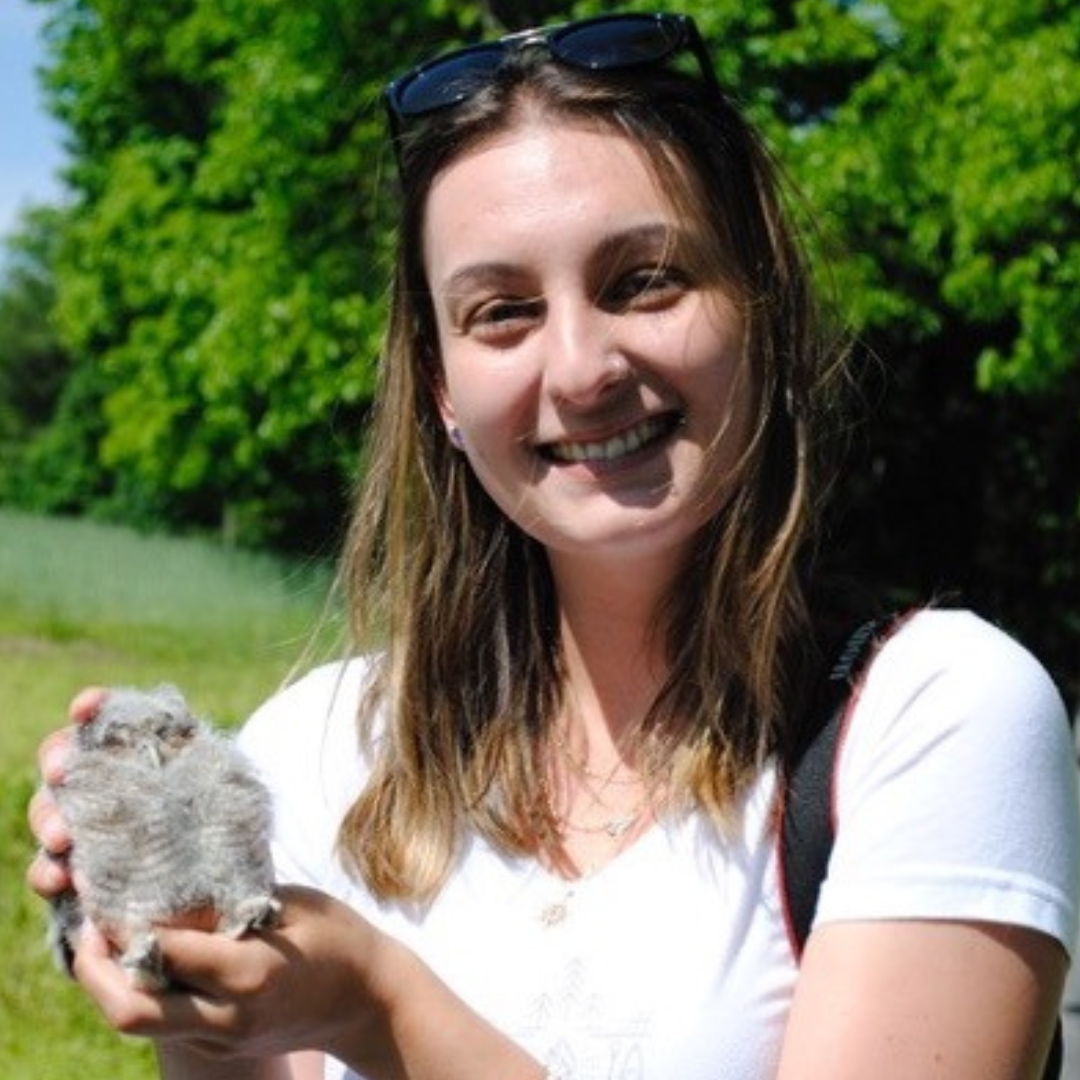
Biologist, FALCON
Andrea Brown holds a bachelor’s degree in wildlife biology and a master’s degree in quantitative biology from McGill University, where she focused her research on developing species distribution models to assess how climate change will impact Canadian birds. Since she started working for Falcon Environmental Inc. in March of 2023, she has been involved in behavioural surveys for protected species, data analysis for airport research projects and several Airport Wildlife Management Plans.